Skip to content
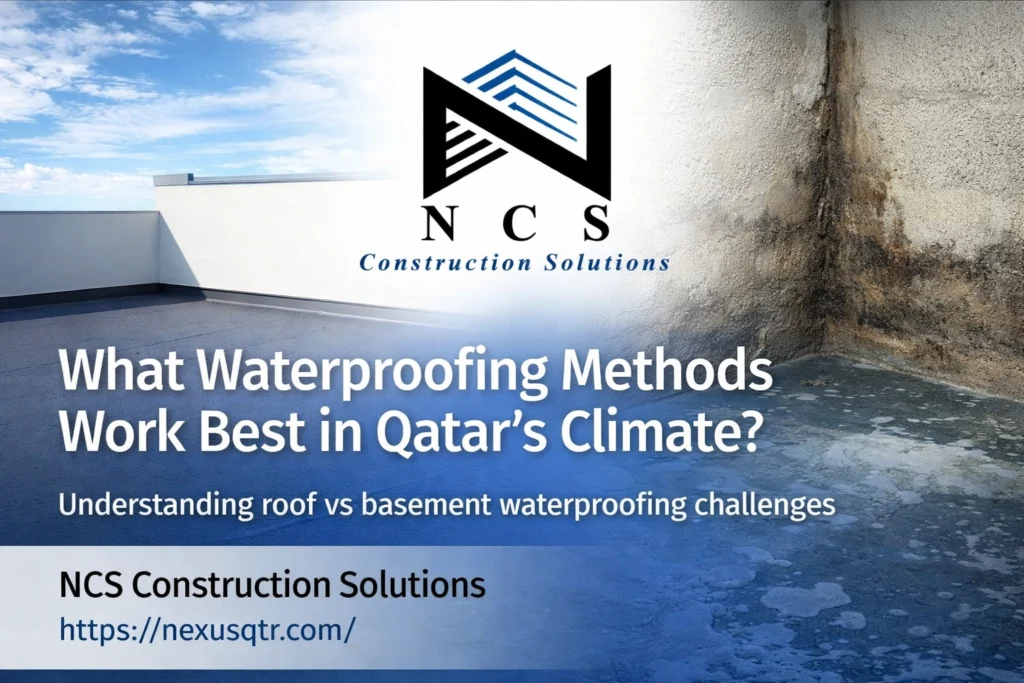
Waterproofing is not the same for every part of a building. In Qatar, roofs and basements face very different moisture risks. Heat, humidity, sudden rain, and groundwater pressure all affect how waterproofing systems perform. Choosing the wrong method often leads to leaks, damage, and repeated repairs.
This comparison guide explains roof vs basement waterproofing in Qatar, which methods work best in local conditions, and how to select the right solution for long-term protection. The insights are based on field experience from NCS Construction Solutions.
Understanding Qatar’s Climate Impact on Waterproofing
Qatar’s environment creates specific waterproofing challenges:
- Extreme surface heat on roofs
- Thermal movement due to temperature changes
- Sudden rain events
- High groundwater levels in some areas
- Humidity that traps moisture inside structures
Due to these factors, waterproofing systems must be selected based on the location, exposure, and potential movement.
Roof Waterproofing in Qatar
Main Risks for Roofs
- Direct sun exposure
- Thermal expansion and contraction
- Standing water after rain
- UV damage to membranes
Roof systems must resist heat, UV rays, and movement.
Common Roof Waterproofing Methods Used in Qatar
| Method | Where Used | Why It Works |
| Liquid-applied membranes | Flat roofs | Seamless and flexible |
| Bituminous membranes | Concrete roofs | Strong water barrier |
| Polyurethane coatings | Exposed roofs | UV resistance and flexibility |
| Cementitious coatings | Utility roofs | Easy application |
Best Practices for Roof Waterproofing
- Proper surface preparation
- Adequate slope for drainage
- UV-resistant materials
- Protection layers were needed
Without these steps, even good materials can fail early.
Basement Waterproofing in Qatar
Main Risks for Basements
- Groundwater pressure
- Soil moisture
- Hidden leaks behind walls
- Limited access after construction
Basements require systems that resist water pressure, not just surface moisture.
Common Basement Waterproofing Methods Used in Qatar
| Method | Applied Area | Why It Works |
| Membrane waterproofing | External walls | Blocks groundwater entry |
| Cementitious waterproofing | Internal walls | Resists moisture penetration |
| Injection systems | Cracks and joints | Seals active leaks |
| Drainage systems | Foundations | Relieves water pressure |
Best Practices for Basement Waterproofing
- Waterproofing from the outside when possible
- Crack treatment before coating
- Drainage planning
- Protection during backfilling
Basement waterproofing often fails when drainage is ignored.
Roof vs Basement Waterproofing: Key Comparison
| Factor | Roof Waterproofing | Basement Waterproofing |
| Main exposure | Sun and rain | Groundwater and soil |
| Movement level | High | Low to moderate |
| Pressure type | Surface water | Hydrostatic pressure |
| Repair access | Easy | Limited |
| Failure impact | Interior leaks | Structural and damp issues |
Which Waterproofing Method Works Best in Qatar?
The best method depends on location:
- Roofs: Flexible, UV-resistant systems perform best
- Basements: Pressure-resistant membranes and drainage work best
Using roof products in basements or basement systems on roofs often causes failure.
Why Waterproofing Fails in Qatar Buildings
Common failure reasons include:
- Using the same system for the roof and the basement
- Poor surface preparation
- Ignoring movement and expansion
- No drainage planning
- Low-quality materials
Correct system selection is more important than material price.
How Professional Assessment Improves Waterproofing Results
A professional waterproofing assessment helps by:
- Identifying the moisture source
- Selecting the correct system type
- Planning movement joints and drainage
- Reducing repeat repair costs
This approach prioritises long-term protection over short-term fixes.
Waterproofing & Moisture Control Services in Qatar
When comparing roof vs. basement waterproofing in Qatar, NCS Construction Solutions offers inspection, system selection, and execution tailored to Qatar’s climate and building conditions.
Learn more about our waterproofing and moisture control services in our website.
FAQs
Is roof waterproofing enough to stop all leaks?
No. Basement leaks often come from groundwater, not roofs.
Can the same waterproofing material be used everywhere?
No. Roofs and basements need different systems.
Which area is more difficult to repair later?
Basements, due to limited access.
Does heat affect waterproofing performance?
Yes. Heat can damage non-UV-resistant materials.
Are injection systems permanent?
They work well for cracks but are part of a larger system.
Who should handle waterproofing in Qatar?
An experienced contractor familiar with local climate and building conditions.